



|
Introduction
The Heart of the Platform
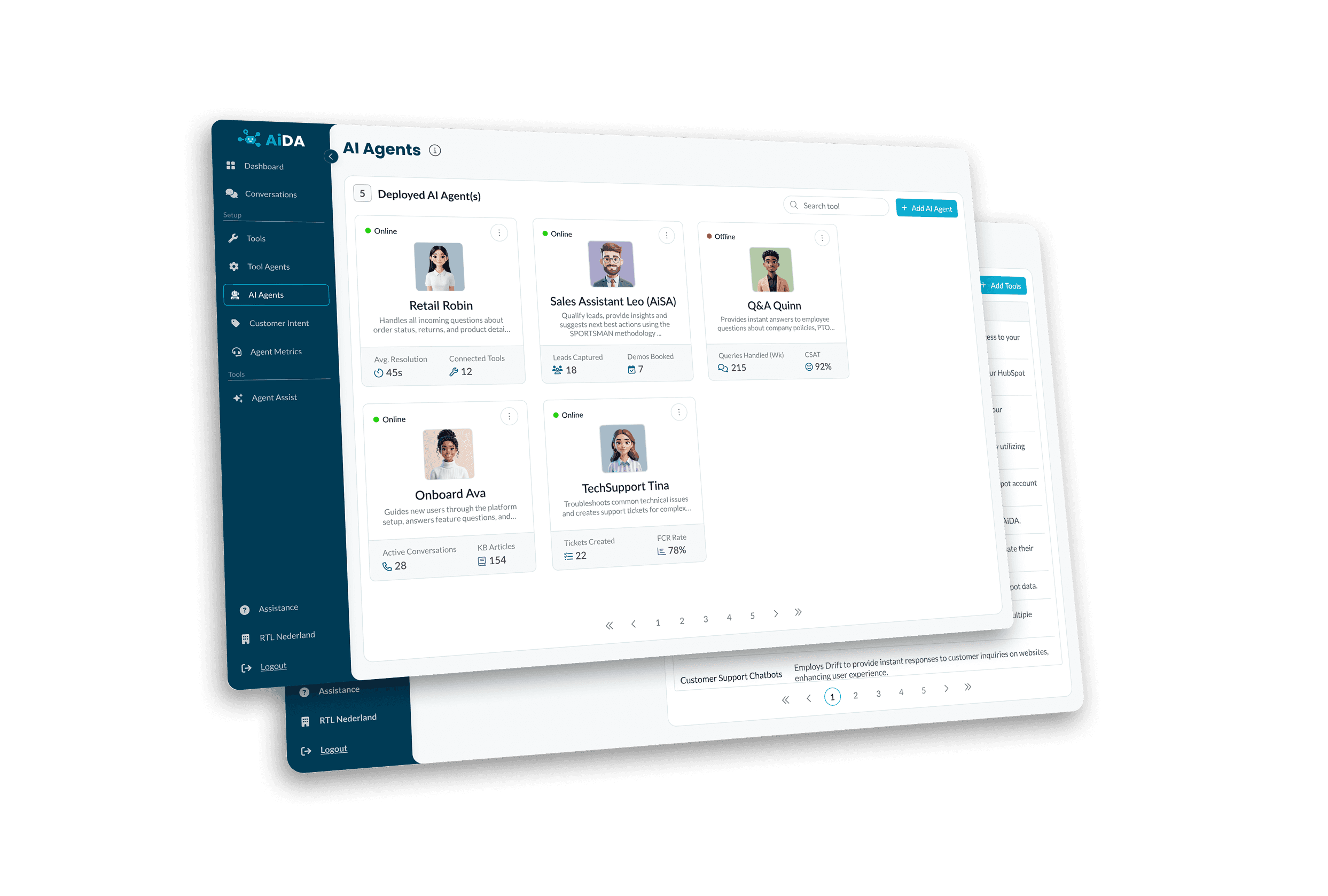
AiDA is a new product initiative at QuandaGo, launched just over a year ago to bring automation to the contact center. The most critical and pivotal part of this platform is the AI Agent. These are autonomous digital workers capable of handling customer support end-to-end via voice and text channels.
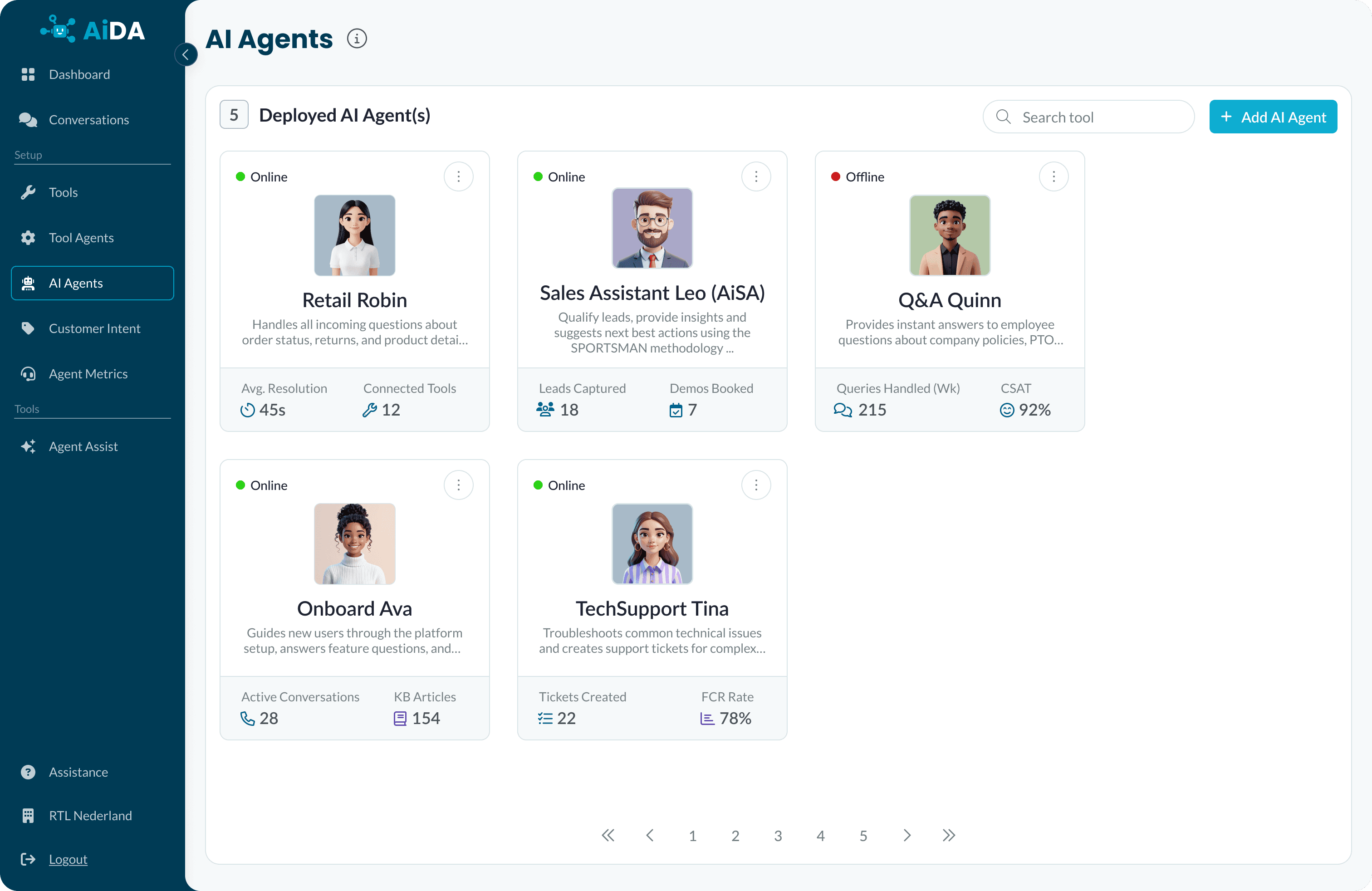
My role was to design the experience that allows users to create and manage these agents. This was a significant challenge because our target users are Contact Center Supervisors (Tim) and Admins (Mark), not engineers. For many, AI is still unknown or misunderstood. Our goal was to strip away the technical intimidation and create a tool that felt empowering from day one.
The Process
Navigating the Unknown
I began this project during my graduation internship, working closely with the Product Manager to plan our approach. Because autonomous AI agents are such a new technology, there were very few established best practices or UI patterns to follow.
The Challenge
Lack of Best Practices: Our competitor research showed that most existing solutions were built for developers. They often provided a single, massive text box for a "System Prompt," requiring the user to know exactly how to write complex instructions.
The Solution
A Guided Configuration Wizard: We saw this as a major opportunity to differentiate AiDA. Instead of a blank text box, I designed a structured Configuration Wizard. I broke the complex system prompt down into human-friendly, logical steps:
Primary Goal: Defining the agent's main objective.
Personality: Controlling the response style and tone.
Knowledge: Selecting specific databases for the agent to reference.
Security: Setting clear "Do Not" rules to control behaviour.
This structure guides the user through the creation process, ensuring high-quality results without requiring them to be prompt engineering experts.
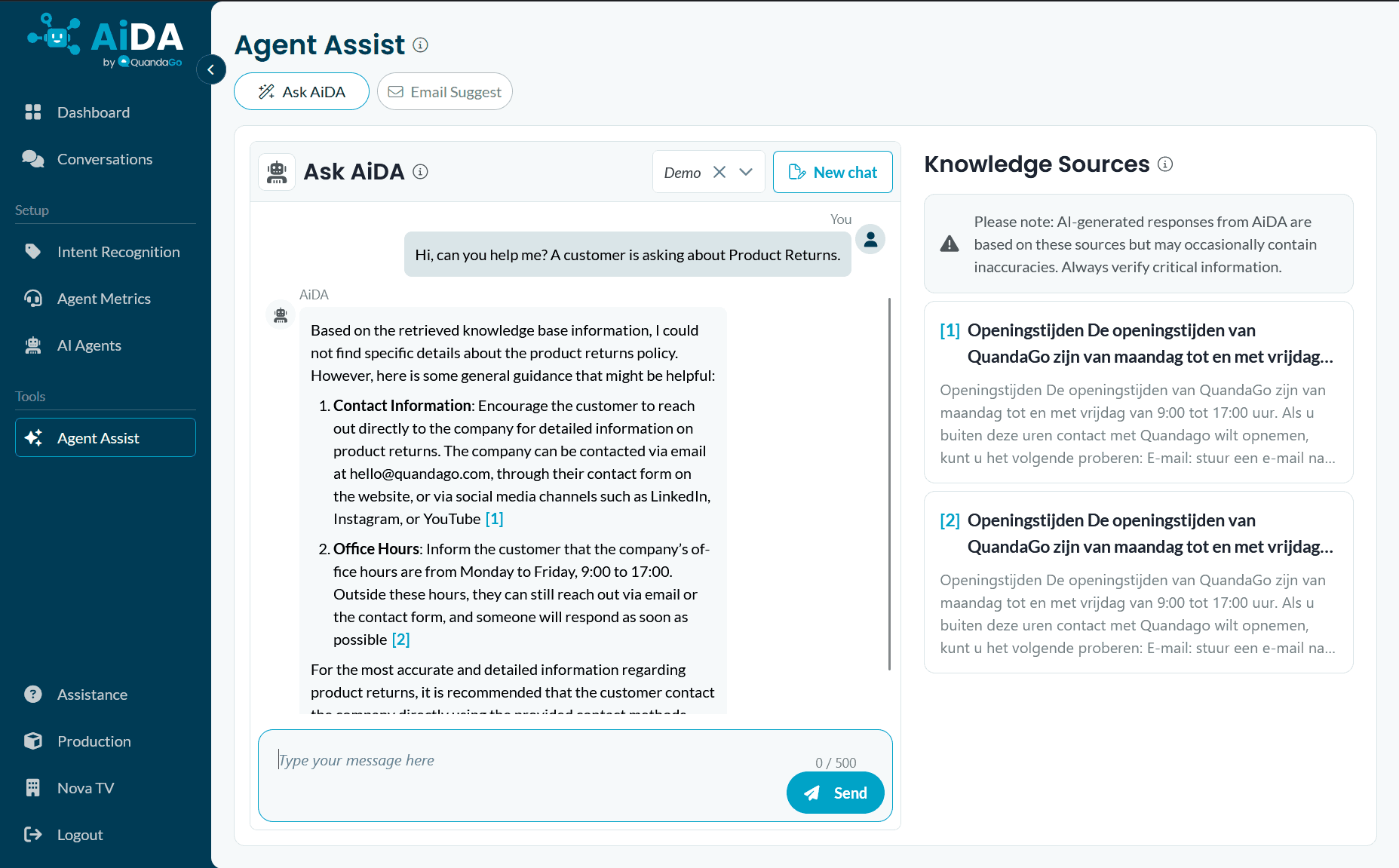
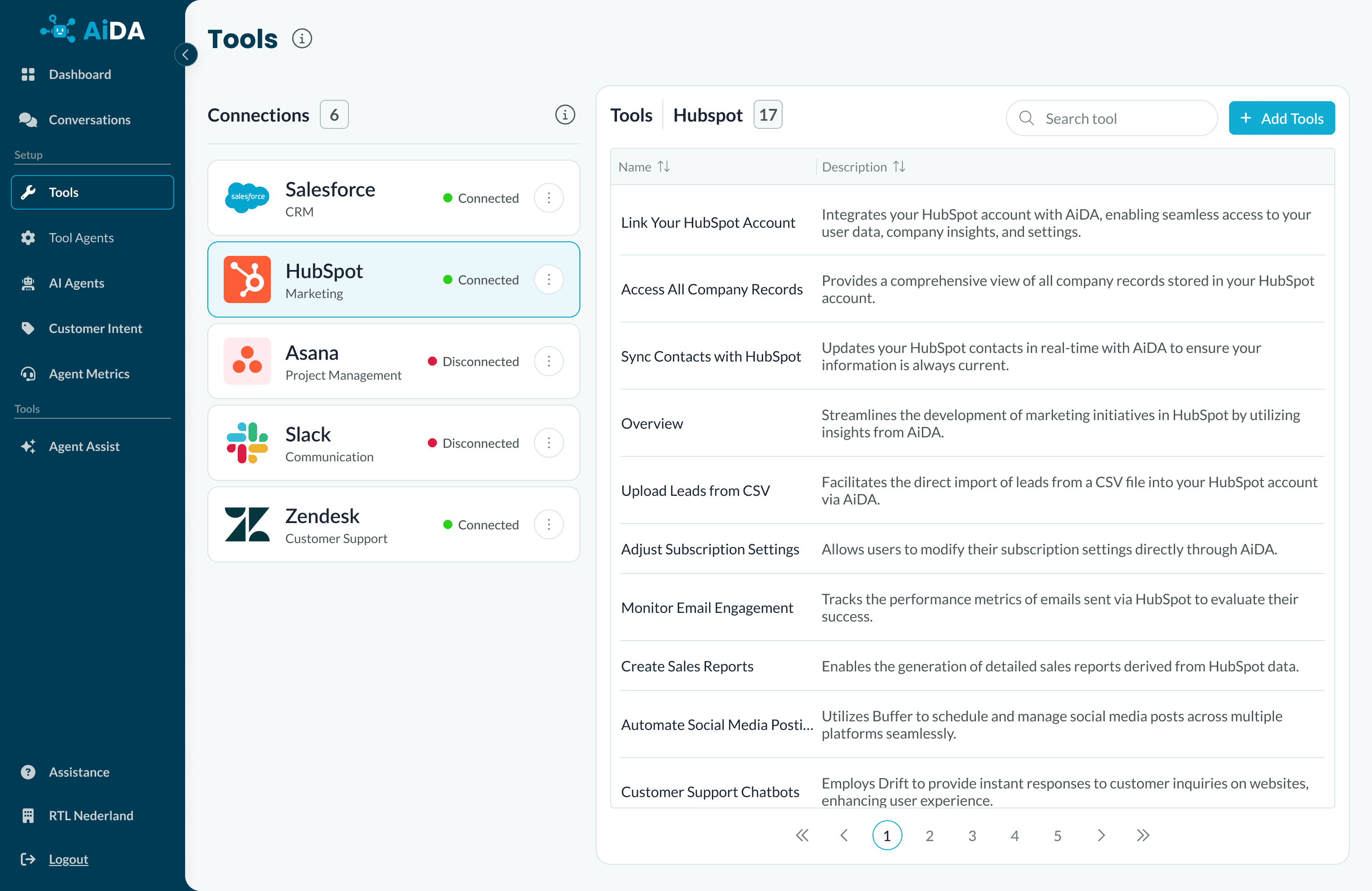
Expanding Capabilities While the early design started during my graduation, the project continued to evolve with more advanced features. I prototyped the integration of Actions and Capabilities, which allows agents to go beyond conversation and actually perform tasks in external systems, like processing a refund or updating a customer record.
Reflection and Impact
Technically, the AI Agents were fully functional and ready for demos by the end of the year. I am proud to say that based on early customer feedback, the UI and the clear, easy UX have become key differentiators (USPs) for the product.
This project proved that in a field as complex as AI, providing clarity and guidance is just as important as the underlying technology. By focusing on the user's mental model rather than just the technical requirements, we created a platform that makes sophisticated automation accessible to everyone.


